Question: “I had a stroke. I can now walk, and the movements of my hand and arm have largely returned to normal. However, I still experience numbness. Which exercises should I do?”
Answer:
After a stroke, it is common for sensory functions to be affected as well as muscle strength. Improvement in movement does not necessarily mean that numbness will improve at the same rate. Sensory recovery may take weeks, months, or even longer in some patients.
For patients experiencing numbness, the aim is to support the brain in relearning how to recognise and process sensations in the affected area. Therefore, sensory and coordination exercises are just as important as strengthening exercises.
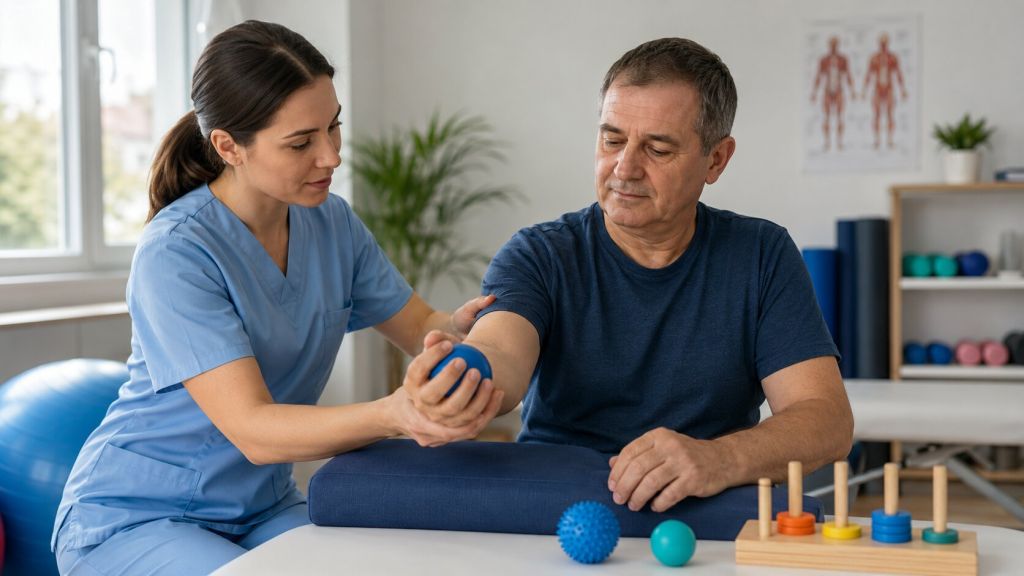
Exercises That May Be Beneficial
Stimulating sensation by touching different textures, such as cotton, towels, sponges, rice, or beans
Performing fine motor exercises such as opening and closing the fingers, fastening buttons, and picking up and releasing small objects
Practising coordination exercises for the hand and arm
Using mirror therapy, where appropriate
Performing balance and walking exercises
Trying to use the affected arm and hand as much as possible during daily activities
When Does Numbness Improve After a Stroke?
The recovery period varies from person to person. Patients who continue with a regular rehabilitation programme may experience significant progress during the first few months. However, recovery of the nervous system is a gradual process that requires patience.
When Should You Consult a Doctor?
If the numbness progressively worsens or if new symptoms such as loss of strength, speech difficulties, facial drooping, or balance problems develop, a neurologist or physical medicine and rehabilitation specialist should be consulted without delay.
Remember: Exercise programmes following a stroke must be tailored to each individual patient. A personalised rehabilitation programme planned according to your examination findings is the safest and most effective approach.